
Vegan Diets And Why They Work
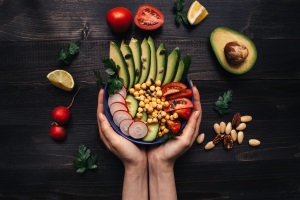
Thinking about going vegan? If you do you'll be joining around 7.3 million Americans who now eat a plant-based diet. But can you really lose weight by switching to vegan food?
A survey of twelve different trials published in the Journal of General Internal Medicine in 2016 (view here) showed that vegan diets are better for weight loss than any other kind.
People who ate vegan lost an average of 5.5 pounds more than other dieters, including those on the Atkins diet and the American Diabetes Association-recommended diet.
So why do vegan diets work so much better than other kinds?
You can eat more
No matter what diet you're on, you'll only really lose weight if you eat fewer calories. An omnivore diet usually needs pretty small portions to keep you under the calorie limit, but vegan diets don't have this problem.
That's because plant-based foods are a lot less calorie-dense than animal products, so you can eat more and still ingest the same number of calories. Eating a full plate of low-calorie food is a lot more satisfying, physically and psychologically, than a tiny plate that includes meat or dairy. The high fiber in vegetables and whole grains also means they take longer to digest and keep you feeling full for longer.
Of course, you still need to stick to reasonable portions, but eating as much as you want of certain things is much less complicated and time-consuming than counting calories and weighing your food. And a simple diet is one you're much more likely to stick to.
Your metabolism goes up
In spite of what you might expect, vegans seem to have faster metabolism. According to Dr Neal Barnard and his team, whose study was published in the American Journal of Medicine (http://www.ncbi.nlm.nih.gov/pubmed/16164885), a group of subjects who switched to a plant-based diet burned significantly more calories after each meal, and their overall metabolic rate shot up.
Dr Barnard theorizes that this is because meat and dairy have more fat in them than most vegan foods, and so people who eat them have more tiny fat droplets floating around their cells. These inhibit the body's ability to transfer nutrients from the blood to the cells where the mitochondria use them for energy. In vegans the insulin transfers the sugar into cells faster and calories are burned more efficiently. So a vegan diet means you burn more calories even while you're sitting around watching TV.
You eat a more varied diet
You would expect that cutting out animal products would severely limit your choices, but in fact the opposite is true; most vegans diets contain a wide range of different foods. Searching for protein sources that aren't meat prompts vegans to experiment with quinoa, tempeh, seitan and other novel foods. Variety in your diet is important to make sure you're getting the full range of vitamins and minerals necessary for good health.
A study published in Nutrition in 2015 (http://www.nutritionjrnl.com/article/S0899-9007(14)00423-7/abstract?cc=y) showed that as well as losing weight, vegans actually improved their macronutrients compared to the other groups. They were eating a better balance of carbohydrates, proteins and fats, and so getting the nutrients they needed without excessive calories.
You're in it for the long haul
Veganism isn't really a diet so much as a lifestyle change. That might make it harder to manage at first, but much easier in the long run. The survey mentioned above showed that not only did vegans lose more weight, they also maintained their goal weight much better than the other groups.
Many vegans report that after a while the cravings go away and they actually start to hate the idea of eating meat or dairy. This makes them less likely to backslide into eating burgers and cookies and more likely to make eating healthy a habit. Stick to the same eating habits for long enough and eventually you don't have to think about them at all – that's when the vegan diet becomes a way of life instead.
You get a lot of support
This is where the old joke about vegans loving to talk about their diets is actually a good thing. There are tons of vegan communities out there to swap recipes and encourage people who want to eat a vegan diet. If you're having trouble finding something to eat in restaurants or want to know if almond milk is better than soy then you can guarantee there will be someone out there who's been through it before and is ready to help.
The support of a community is very important for sustaining your diet over the long term. Eating different food from your family and friends at home or when you go out to eat can feel a little bit isolating, and other diets don't always offer that feeling of being part of the club the way veganism can.
You really think about what you're eating
Let's face it, most of us grab things off the supermarket shelves without ever looking at the ingredients, and as a result we're eating a lot more sugar, salt and fat than is good for us.
If you're on a vegan diet, you get into the habit of checking the ingredients and nutritional values on the back of packaging to see if you can eat it something. Seeing all the chemicals and preservatives that go into packaged food, or the amount of sugar in supposedly 'healthy' food like cereal helps remind people what they should and shouldn't be eating.
And since so much processed food has small amounts of animal products in it, vegans end up eating a lot more fresh food and fewer ready meals or processed snacks which are full of calories but no nutrients.
If you struggle to go completely vegan then start by cutting down on the amount of animal products you eat. Many people find it easiest to cut out red meat first, then all meat, then gradually reduce the amount of dairy products and eggs they eat before eliminating them completely. Focus on short-term goals like eating no meat two days per week, and you'll steadily find it easier to eat a vegan diet until you no longer want to eat anything else.
From The Web
Sponsored Content